
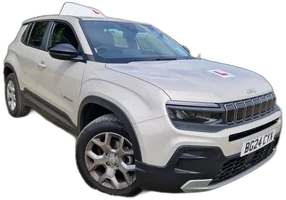
Taking your driving test can be incredibly stressful — it challenges both your driving ability and your ability to stay calm under pressure.
This guide covers everything you need to know on the day: what to bring, how the test works, common mistakes, and helpful tips to keep you confident and in control.
If you still need to book your test, visit the DVSA website. If you’re in the Mexborough, Rotherham or Doncaster area and want lessons or a pre-test warmup, get in touch.
Key Takeaways
- Bring your provisional licence and any required eyewear.
- It’s a safety test — not a perfection test.
- You’ll do one manoeuvre and possibly an emergency stop.
- Observations are the most important skill.
- If you take a wrong turn, stay safe and don’t force it.
Preparation
On test day, bring the following:
- Provisional licence
- Theory test pass certificate
- Any prescribed glasses or contact lenses
Examiners rarely ask for the theory certificate, but it’s recommended to bring it. Bring a drink and try to arrive feeling as relaxed as possible.
Morning of Your Driving Test
I normally take learners out for a warm-up hour before the test — a chance to run through manoeuvres, show me/tell me questions and settle the nerves. Some prefer grabbing a coffee instead. Do what works best for you.
At the Test Centre
We aim to arrive about 10 minutes early so there’s time to relax, use the toilet if needed, and get your mindset right.
We reverse park into a bay — this makes starting the test easier and avoids reversing out under pressure.
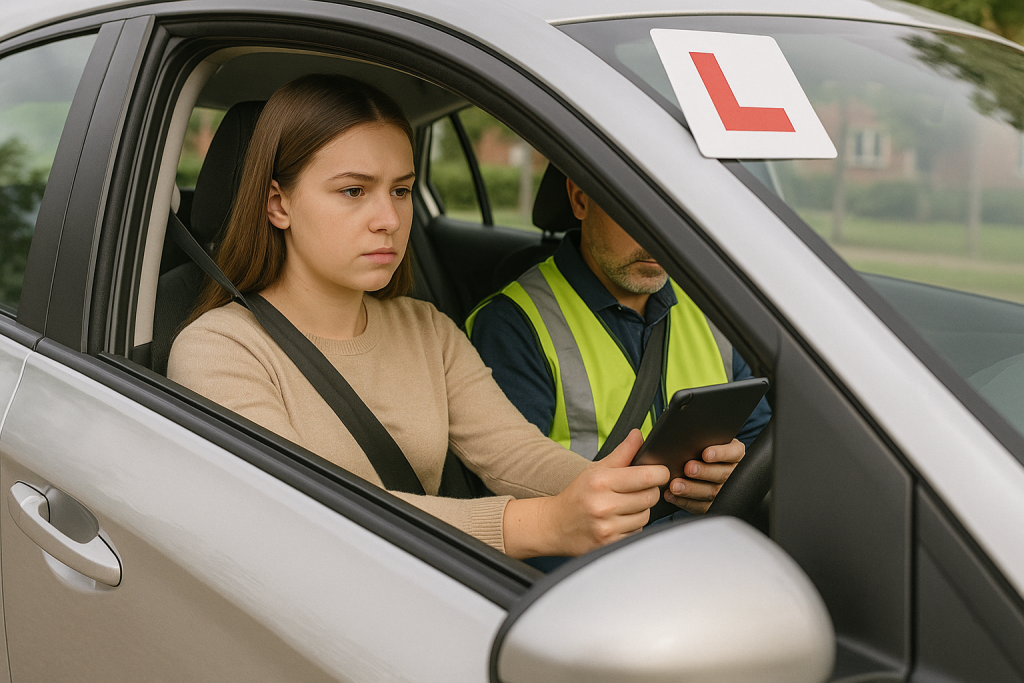
Before going inside, I’ll disable audio recording on the dashcam, adjust cameras, turn off the in-car sat nav, and set the car up. You can choose whether to have quiet background radio on the test.
The examiner will check your licence and address, and ask whether you want me to sit in the back (totally optional). You’ll then sign an iPad to confirm residency and insurance.
The Driving Test
The test begins with a number plate check from 20.5 metres, followed by a “tell me” safety question. The “show me” question happens while you’re driving.
You’ll do:
- around 15 minutes following normal directions
- around 15 minutes following a Sat Nav or signs
- one reverse manoeuvre
Tip: If you make a mistake, let it go. Small mistakes only become big ones if you dwell on them.
You may be asked to do an emergency stop (around 1 in 5 tests includes this).
The manoeuvre will be one of:
- Parallel park
- Forward bay park
- Reverse bay park
- Pull up on the right (then reverse)
Observation is the most critical part of every manoeuvre — mirrors, blind spots, and all-round awareness.
Tip: If you’re in the wrong lane, take the exit for that lane. A safe wrong turn is better than a dangerous correction.
On returning to the test centre, stay focused. Many mistakes happen right at the end because learners think it’s over too soon.
Deep breath. You’ve done it.
The Result
Your instructor can join you for the result. The examiner will tell you if you’ve passed or not, and explain any faults.
You’re allowed up to 14 minors, or up to 4 of the same minor before it becomes a serious fault.
If You Fail
You must wait 10 days before retaking the test, but you can book again immediately. Use the examiner’s feedback — you were put forward because we believed you could pass.
If You Pass
Congratulations! Passing your test is a brilliant achievement.
You can drive immediately using your pass certificate. The examiner can send off your provisional licence, or you can do it yourself.
Enjoy your new independence!

Need Help Preparing for Your Driving Test?
I offer pre-test lessons, mock tests and confidence sessions to help you feel fully ready.
My next available lesson slots start from End of Sept 2026.